Key takeaways
- Wednesday's Budget will set out how the UK plans to reach its 3 per cent defence spending target by 2030.
- The Treasury will add £20.4bn to the National Wealth Fund and British Business Bank, with defence among the sectors the money will support.
- Healey is expected to fill a £4.7bn gap in the Defence Investment Plan, having resigned as defence minister in July over a lack of investment.
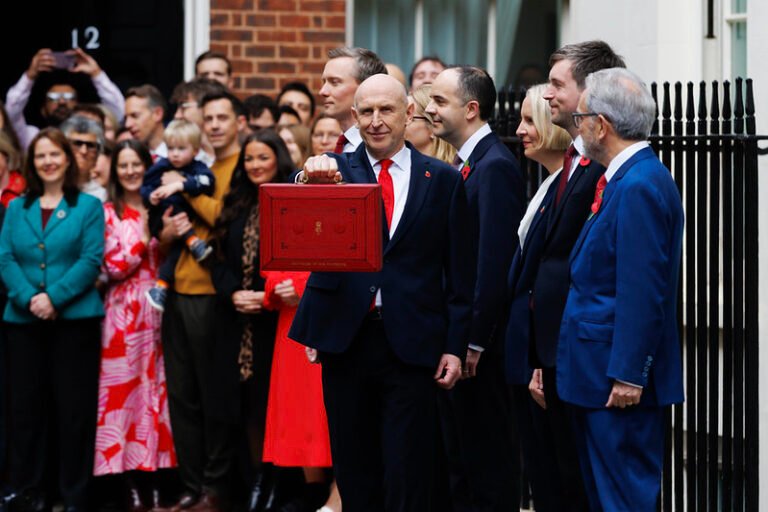
Chancellor John Healey is expected to use Wednesday’s Autumn Budget to channel billions of pounds into UK defence companies through the National Wealth Fund (NWF) and the British Business Bank (BBB), according to the Sunday Times.
The Treasury confirmed on 24 October that it would give the two state-owned lenders £20.4bn of extra capital over about five years: £15.4bn for the NWF and £5bn for the BBB. It named defence alongside AI and green energy among the sectors the money should support, but has not said how much will go to defence.
Drone makers and military technology companies are among the expected beneficiaries, the newspaper reported. The money would be borrowed, but it does not affect the Treasury’s fiscal rules because the investments are expected to bring returns, and it would count towards NATO’s defence spending target. The paper described the move as a “downpayment” on Healey’s ambition to spend 3 per cent of GDP on defence.
Andy Burnham, the prime minister, said on Monday that Healey would use the Budget to set out “the path to meet our NATO commitments”, and confirmed this would include reaching 3 per cent of GDP by 2030.
Neither lender is particularly active in defence so far. The NWF made its first defence investment in May, putting £25m into Rowden, a Bristol-based maker of sensing and information systems. The government’s Defence Investment Plan (DIP) meanwhile said the BBB would invest “hundreds of millions” to improve access to capital for defence and dual-use small and medium-sized enterprises (SMEs).
A £4.7bn gap
Alongside this new expected investment, the Budget is also expected to fill a £4.7bn gap in the DIP, published on 30 June. Only £10.3bn of the plan’s extra £15bn over four years had an identified funding source, according to the House of Commons Library. Wes Streeting, the defence secretary, told MPs on 13 October that the chancellor had promised the remaining money would be covered in the Budget.
Healey resigned as defence secretary in June after a dispute with the Treasury over defence funding. He had previously said the date for reaching 3 per cent would be set at next year’s spending review.
The DIP commits £297.7bn to defence over the four years to 2029/30, with the Ministry of Defence’s budget rising from £68.3bn this year to £79.1bn. It puts NATO-qualifying spending at 2.7 per cent of GDP in 2027/28. For technology companies, it commits at least 10 per cent of the annual equipment budget to novel technologies such as AI, autonomy and quantum, rising from £2.1bn in 2026/27 to £3.2bn in 2029/30. It also earmarks more than £5bn for autonomous systems over four years and aims to raise direct spending with SMEs by £2.5bn, or 50 per cent, by 2028.
“Private capital has never been more optimistic on UK defence, and the DIP has a lot to do with that, but investors need more clarity,” Matt Croker, corporate finance partner at Heligan Group, a Birmingham-based investment and advisory firm, told Defence Deals.
Money arriving late
Much of the money for AI and autonomy is back-loaded, meaning it is weighted towards the final years of the plan rather than available now. Spending on the two sub-sectors rises from £380m in 2026/27 to £1.3bn in 2029/30, and almost 70 per cent of the £3.6bn four-year total falls in the last two years. The digital backbone and targeting web, which connect the armed forces’ sensors, decision-makers and weapons, receive £7.5bn over the four years and at least £17bn between 2030 and 2035, a period the plan leaves largely unallocated.
Croker said the timing of that spending worried investors more than the date for reaching 3 per cent. “Capital goes where it can see contracts several years out,” he said. “In practice, investors put a value on what’s funded before 2030, and anything after that is treated as a bonus if it arrives.”
Promises to investors
The DIP also promised a Defence Finance and Investment Strategy setting out how the government will work with private capital, a Defence Investment Summit, and an investment roadmap to give investors earlier sight of opportunities. None had appeared at the time of writing.
A new Defence Investment Unit, inside the MoD’s National Armaments Director Group, will act as the department’s centre of expertise on finance and investment, using private sector secondees to turn priorities into propositions investors can assess. A Defence Investors’ Advisory Group, drawn from venture capital, private capital, lending and banking, will advise on how to make defence more investable.
Croker however said there was “a fair amount of fatigue, a sense that we’ve heard all this before… The SME defence community has little patience left for political spin”.
Window of opportunity
Other sources told Defence Deals that defence tech start-ups face a further hurdle once a product is proven. The capital needed to build manufacturing capacity and fulfil large orders can be dramatically different from what was needed to develop the original technology. Fewer investors are equipped or willing to finance that stage, particularly when procurement cycles are long.
For Croker, the gap is one of understanding rather than appetite. Most of the private capital looking at defence “does not truly understand the sector”, he said, and clearer priorities backed by committed spending would help turn interest into investment.
“There is a window of opportunity over the next 18 months,” but it could pass most of the private sector by “unless the sector is easier to navigate and understand from a risk and return perspective”, he said.
The UK Autumn Budget will be delivered on Wednesday 28 October 2026.