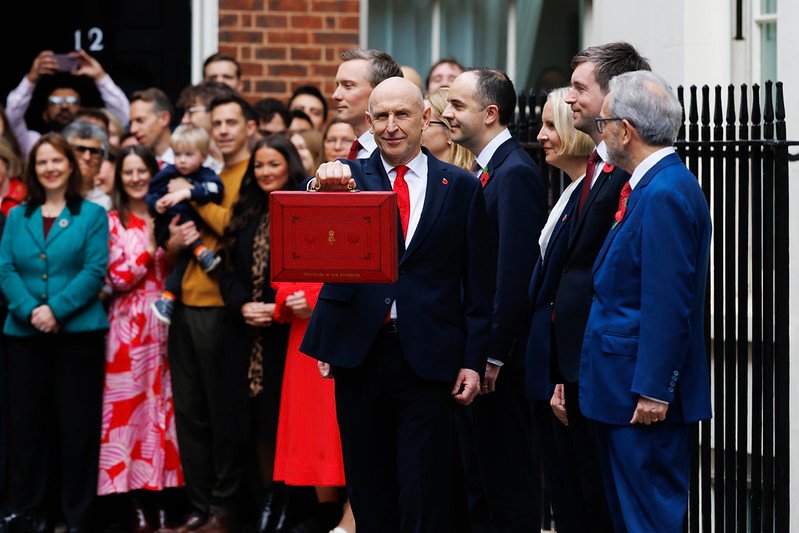
The National Wealth Fund (NWF) and the British Business Bank (BBB) will deploy up to £5bn of investment and lending into defence, dual-use technology and sovereign capability over the next four years, Chancellor John Healey said in his Budget on 28 October.
The Treasury said the money would go into “defence, dual use and other sectors that support our national security, sovereign capability and resilience”. Sovereign capability is capability the UK can produce or control without relying on foreign suppliers. Healey told MPs the commitment was “an immediate step” in getting more private investment into defence.
The commitment came alongside £20.4bn of additional capital for the two state-owned lenders: £15.4bn for the NWF, including £2bn for a new Energy Wealth Fund, and £5bn for the BBB. The Treasury did not say whether the defence money would come from that capital, or how it would be split between the two lenders.
Neither lender has been a large defence investor so far. The NWF made its first defence investment in May, putting £25m into Rowden, a Bristol-based maker of sensing and information systems. In a statement on the Budget, the NWF said it would “substantially increase its focus on defence”, alongside critical minerals and AI. The Treasury said the BBB’s extra capital would add equity capacity and a new venture-debt offer.
Defence plan funded
The Budget also covered the £4.7bn left unfunded in the £15bn Defence Investment Plan (DIP), the four-year spending plan published in June. Of that, £3bn will come from cutting departmental capital budgets by a further 1 per cent between 2027-28 and 2029-30, and £1.7bn from unallocated contingency in the Treasury’s capital reserve. The other £10.3bn had already been found by reprioritising spending.
Defence spending this year is £14bn higher than in the previous government’s final year, according to the Treasury, and the DIP takes it to 2.7 per cent of GDP in 2027-28. The government will set out at next year’s Spending Review how it will meet the NATO commitment of 3.5 per cent of GDP by 2035, with 2030 as the target date for 3 per cent.
Private and international finance
A new Innovative Defence Financing Taskforce, drawing on experts from government, finance and the investment community, will look for ways to increase private and international investment in defence and to remove barriers to it. It will run until the next Spending Review.
The UK will also begin treaty negotiations with the Netherlands, Finland and Poland on a Multilateral Defence Mechanism, which would pool allies’ demand and allow joint procurement. The government aims to have it running in 2027.
The Treasury said it would build a pipeline of private finance opportunities, including public-private partnerships where they offer value for money, with details to come in a forthcoming Defence Financing and Investment Strategy. The DIP promised such a strategy in June; it has not yet been published.
Other measures included a joint 10-year, £2.5bn programme with Rolls-Royce on gas turbine technology for civil and defence aerospace, and a £3bn increase in UK Export Finance capacity for Ukraine, to £6.5bn, prioritised for military support.
A new Founders Relief will cut capital gains tax to 10 per cent on up to £10m of lifetime gains for founders of eligible high-growth companies.
Kevin Craven, chief executive of ADS, the trade association for the UK’s aerospace, defence, security and space industries, said the NWF and BBB measures “will help in the short term”, in comments published by the association’s ADS Advance. But he said industry was still waiting for “the full and detailed plan it needs to invest with confidence”.