British air defence startup Cambridge Aerospace has raised $300 million at a $3.4 billion valuation, more than doubling its value since an April funding round, as investors back the company’s low-cost drone interceptor and plans to expand production.
The Series C round was led by California-based DFJ Growth, with participation from existing investors including Lux Capital, Accel, Lakestar, Never Lift and Elad Gil. It follows a $200 million funding round in April that valued the company at $1.3 billion, taking total funding since its 2024 founding to more than $630 million.
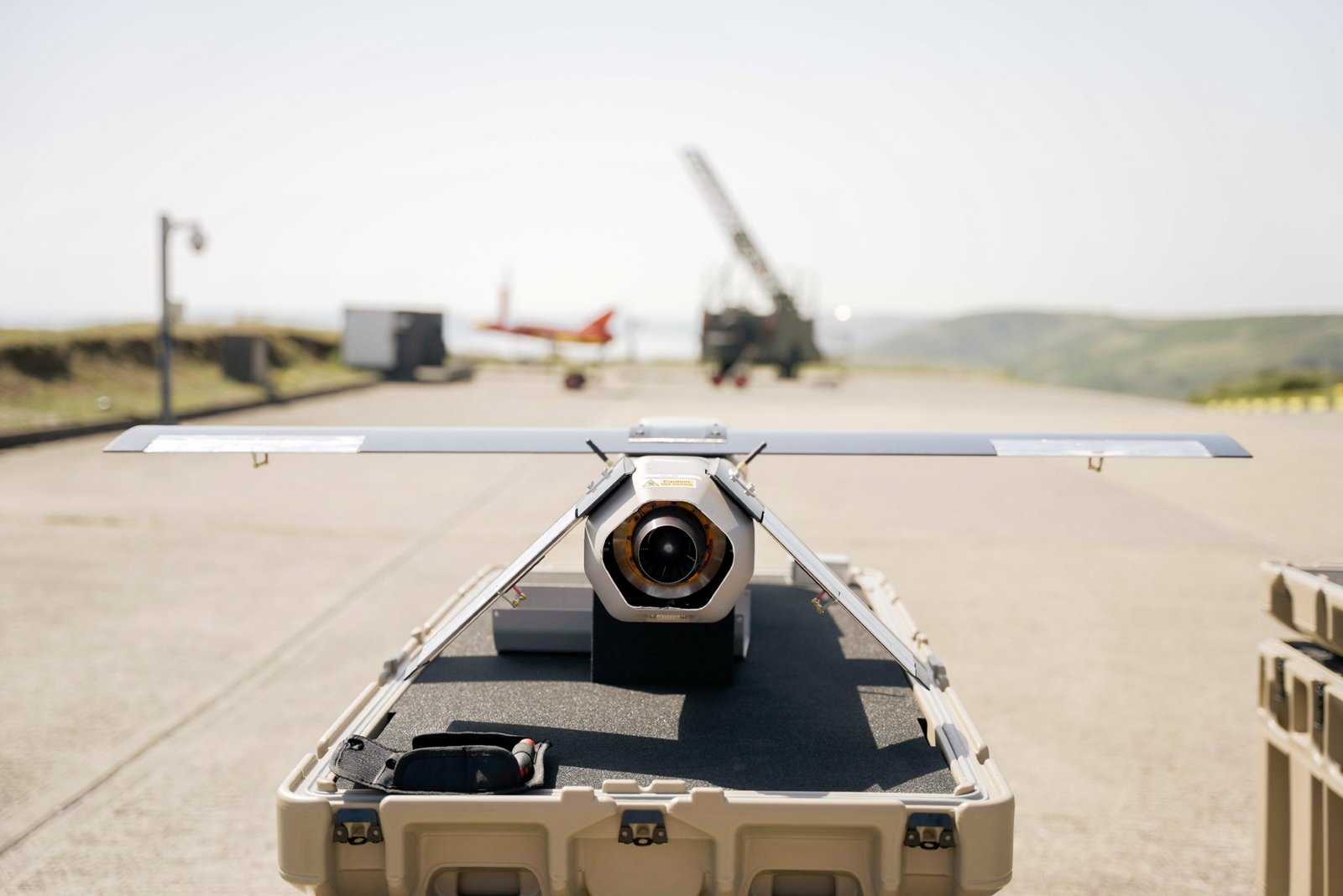
Much of the new funding will go towards scaling production of Skyhammer, a low-cost interceptor designed to counter Shahed-style attack drones at ranges of up to 30km and speeds of 700km/h. Cambridge aims to increase production to 2,500 units a month by March 2027 and is building what it says will be Europe’s largest solid rocket motor factory in Norfolk.
The company has brought production of key components in-house, including its own Nightstar solid rocket motors. Solid rocket motors have become a significant supply constraint as demand for missiles and interceptors rises, making propulsion capacity an important limitation on efforts to expand air-defence production.
Cambridge has secured a multi-million-pound contract with the UK Ministry of Defence to supply Skyhammer and launchers to British forces and Gulf partners, with first deliveries beginning in May. In July, it was also one of three companies awarded contracts under the UK’s Low-Cost Air Defence Effectors programme to develop and trial lower-cost interceptors. The company has tested Skyhammer in Jordan and is in talks with the US government over potential supply.
Cambridge is also developing Starhammer, a faster interceptor designed for higher-speed threats such as ballistic missiles, with the system expected to reach the market in 2027.
“We surveyed the global landscape and identified Cambridge as having the best team and technology to build the most advanced and modern air defense infrastructure for Europe and its allies,” said Randy Glein, founder and managing partner of DFJ Growth.
Cambridge now employs around 250 people and operates across the UK and several other countries. Chief Executive Steven Barrett said the funding would allow the company to expand manufacturing and delivery while continuing development of new defence systems.
The raise adds Cambridge Aerospace to a run of large European defence tech funding rounds this year, following Stark’s €500 million raise in June and Helsing’s $1.8 billion round at an $18 billion valuation in July. Unlike those two, which build strike drones and battlefield software, Cambridge Aerospace sits on the defensive side of the market, developing interceptors rather than offensive systems — a segment analysts at Fortune Business Insights project will grow from $3.9 billion to $16.5 billion by 2034.
As with several of this year’s large defence tech rounds, Cambridge Aerospace’s valuation rests primarily on contracts secured and production targets set out, rather than on disclosed revenue figures, which the company has not published. That is a common feature of early-stage defence hardware investing, where production capacity and government relationships can take years to translate into revenue at scale.
The UK government has separately moved to widen the pipeline of companies like it, launching a scheme aimed at developing the next generation of British defence “unicorns,” with 13 companies awarded accelerated contracts in May.